

06/03/2014 - Islam and Pluralism in Indonesia: Inspiration for Europe?
On 6 March 2014, the Centre for Asia Pacific Studies held an international seminar on Islam and Pluralism in Indonesia.<br />Speakers: Dr Ahmad Suaedy, Dr Syafiq Hasyim, Dr Hynek Kmoníček
The ten years of President Susilo Bambang Yudhoyono's administration have seen the rise of religious intolerance driven by radical Islamism, affecting all communities through discriminatory legislation, inflammatory rhetoric by some Government ministers, and a consistent failure to protect minorities, promote the rule of law and uphold justice. With parliamentary and presidential elections in 2014, there is now a real urgency, as well as an opportunity, to act to prevent further erosion of Indonesia's pluralism and to pull back from the path of intolerance which has been termed by some as a process of 'Pakistanisation'.
The individual presentations and ensuing discussion focused, among others, on the following topics:
- Is there really a growing religious intolerance in Indonesia or are the extreme voices of Islam still confined to the 'edges' of the mainstream Muslim community?
- Has democracy in Indonesia contributed, or rather undermined, religious tolerance and harmony in Indonesia?
- Being one of the most diverse societies, comprising of many religious and ethnic groups, what can Europe learn from the Indonesian experience of managing diversity?
- With the growing number of immigrants in Europe, what policies should the governments (with a special reference to the Czech Republic) implement to avoid a similar escalation of tensions between the Muslim migrants and the mainstream population, like in the UK and France in the past?
Dr Suaedy suggested that there is a big difference between Indonesia and other Muslim countries in that the former has a very powerful Muslim civil society. Dr Hasyim expressed the view that Islamophobia in Europe in general is still a bit problematic. In the context of Europe, it is clear that the debate over multiculturalism largely refers to Islam in the West. Growing anti-immigration and anti-Muslim sentiments have been fuelled by the belief that Muslims are not "willing" enough to integrate themselves in society. In some ways it can be argued that the "Islamization of Europe" is an over exaggerated fear, as religious extremists behind attacks are not representative of the population as a whole. Integration does not require assimilation; rather, it is about equal opportunity, mutual tolerance, and constant interaction among distinct social identities and cultures.
After the seminar, there was a refreshment of Indonesian delicacies.
 Photo Gallery
Aktuálně
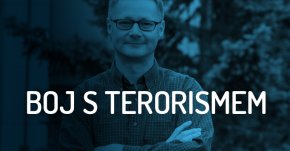 Co odlišuje terorismus od jiných forem násilí
16. 8. 2026 Autor: redakce
Prof. Oldřich Bureš z Katedry mezinárodních vztahů a evropských studií se zúčastnil zajímavé diskuze, respektive natáčení dílu podcastu 10:35 na téma Co odlišuje terorismus od jiných forem násilí. Společně s Vojtěchem Šimákem a Petrem Mlejnkem byly diskutovány soudobé i historické aspekty terorismu.
Co odlišuje terorismus od jiných forem násilí
16. 8. 2026 Autor: redakce
Prof. Oldřich Bureš z Katedry mezinárodních vztahů a evropských studií se zúčastnil zajímavé diskuze, respektive natáčení dílu podcastu 10:35 na téma Co odlišuje terorismus od jiných forem násilí. Společně s Vojtěchem Šimákem a Petrem Mlejnkem byly diskutovány soudobé i historické aspekty terorismu.
 Elektrizující atmosféra a plný klub: MUP Night zakončila školní rok ve velkém stylu
27. 6. 2026 Autoři: Dominik Borek, Sebastian Szaban
The end of the school year party se uskutečnila v klubu The Pitch a proběhla ve skvělé atmosféře plné hudby, zábavy a dobré nálady.
Elektrizující atmosféra a plný klub: MUP Night zakončila školní rok ve velkém stylu
27. 6. 2026 Autoři: Dominik Borek, Sebastian Szaban
The end of the school year party se uskutečnila v klubu The Pitch a proběhla ve skvělé atmosféře plné hudby, zábavy a dobré nálady.
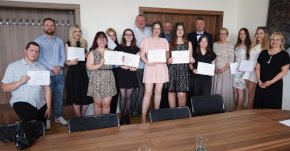 Profesní certifikáty GSA v oblasti marketingu leteckých společností a destinačního managementu
23. 6. 2026 Autor: Nora Dolanská
Slavnostním předáním certifikátů studentům, kteří absolvovali kurz pro General Sales Agenty v oblasti marketingu leteckých společností a destinačního managementu, letos poprvé vyvrcholila doplňková výuka bakalářského i magisterského studia na Katedře cestovního ruchu.
Profesní certifikáty GSA v oblasti marketingu leteckých společností a destinačního managementu
23. 6. 2026 Autor: Nora Dolanská
Slavnostním předáním certifikátů studentům, kteří absolvovali kurz pro General Sales Agenty v oblasti marketingu leteckých společností a destinačního managementu, letos poprvé vyvrcholila doplňková výuka bakalářského i magisterského studia na Katedře cestovního ruchu.