


Pilot testing of the MELIA Observatory learning materials
We have completed the pilot testing of the MELIA Observatory learning materials. Among other things, the project has created interactive presentations on media literacy for secondary school students. MUP was responsible for testing these materials which took place on 9 September and 10 October.We cooperated with the students of the Jarov Secondary School, who took part in two consecutive lessons on the topics of Behaviour on Social Networks, Critical Thinking, Manipulation and Propaganda and Politics. Both lessons were conducted by the professor of the Department of Media Studies Mgr. Eva Niklesová, Ph.D. The students then gave us feedback through questionnaires, the results of which we will compare with the results of testing in other countries. We hope that the teaching materials, which are available on the project website, will be useful for future teaching.


Other items from the/this section
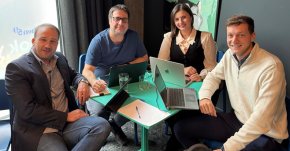 The SMILE Project Enters Its Final Phase: Focus on Practical Outputs and Workshops
The SMILE project, which aims to strengthen leadership skills, digital skills, and media literacy among young people in rural areas of the Danube region, entered its final year this fall.
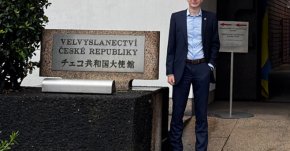 From MUP to the Czech Embassy in Tokyo
12. 11. 2026 Author: Adam Outrata
My name is Adam and I am a student of the 5th semester of my bachelor's degree in International Relations – European Studies. But currently I am an intern at the Embassy of the Czech Republic in Tokyo, Japan, in the commercial and economic section of the embassy. In addition to my studies at MUP, I got this opportunity thanks to an exchange study stay in Denmark at Aarhus University, where I studied Political Science.
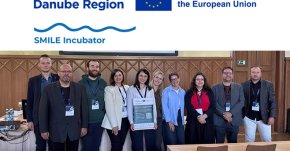 University Representatives and the SMILE Project Team at the CEPSA Anniversary Conference
The prestigious two-day conference organized to mark the 30th anniversary of the Central European Political Science Association (CEPSA) welcomed academics and scholars from all around Europe and the world. This significant event, which is a living proof of successful cross-border academic cooperation, offered a rich program full of panel discussions and round tables on various socioeconomic and political academic papers.
Calendar
24/11 2026
Portfolio Information Session
The Department of International Relations and European Studies (IRES) invites all first- and second-year students to an information session dedicated to the study portfolio.
25/11 2026
Why EU-ASEAN Relations Matter
The Department of Asian Studies invites students of International Relations, Asian Studies, Political Science, and other fields to a lecture and discussion with David Hutt.
30/11 2026
MUP Christmas Tree Lighting and Concert
You are cordially invited to join us for a brief Christmas concert and the lighting of MUP Christmas tree at the start of the Advent season.
09/12 2026
Day of Open Doors
Metropolitan University Prague invites prospective applicants to participate in the Day of Open Doors.
Go to Calendar