

The EU’s Climate Leadership: Global Solution or Green Imperialism?
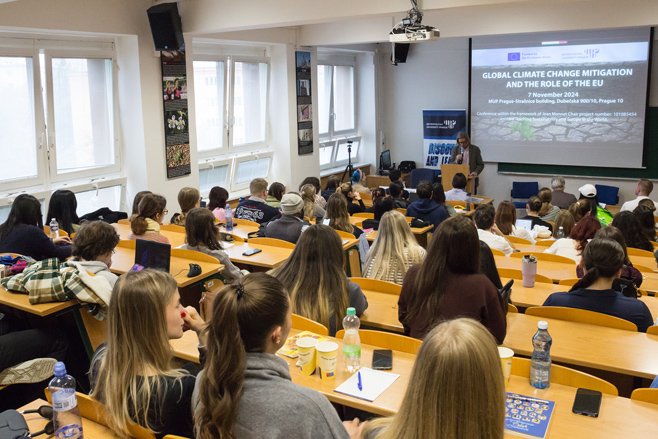
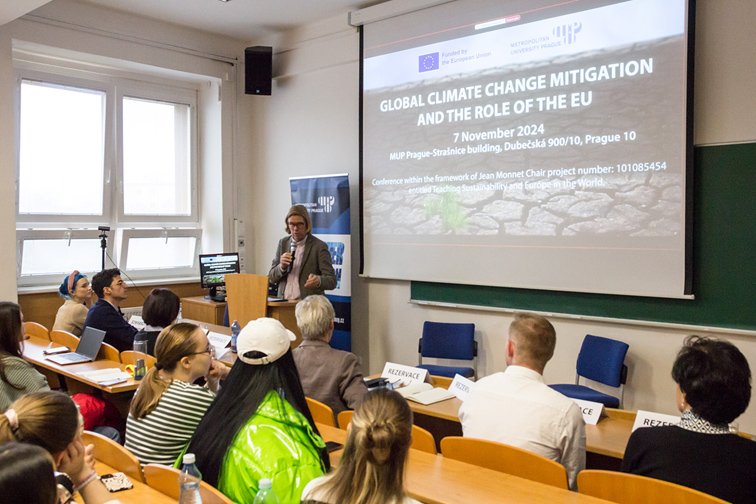
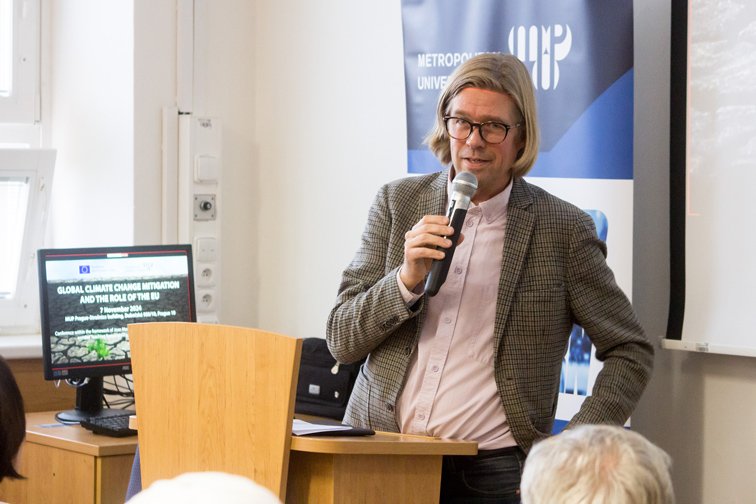
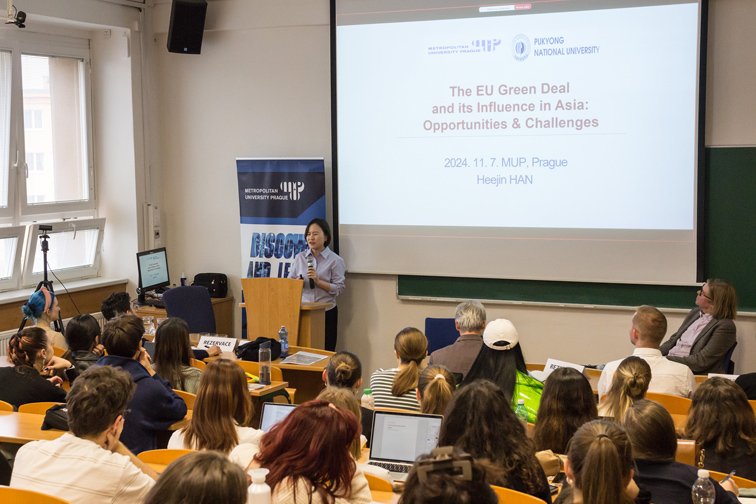
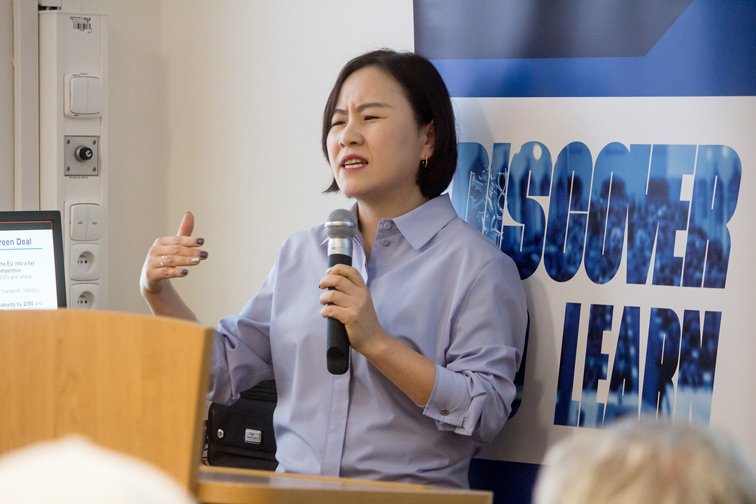
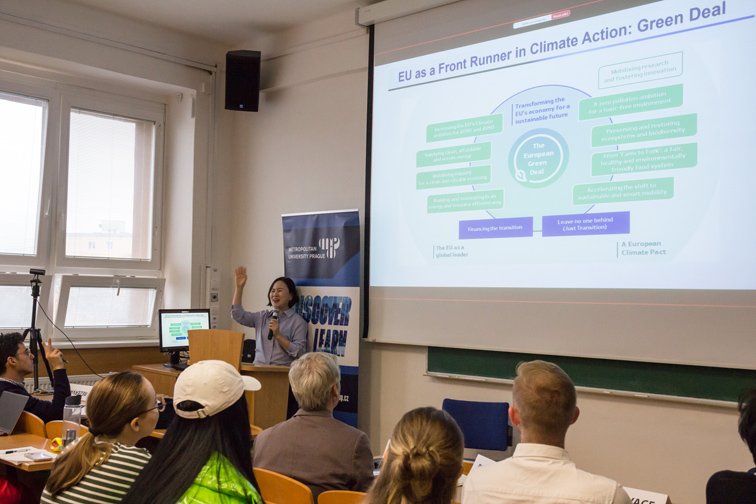
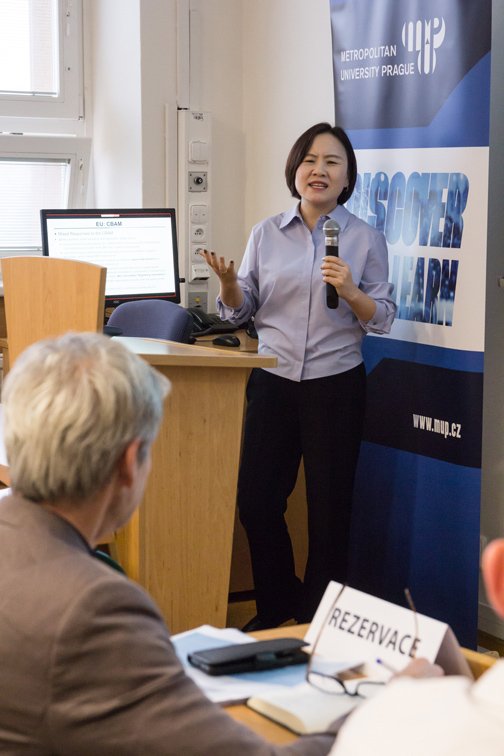
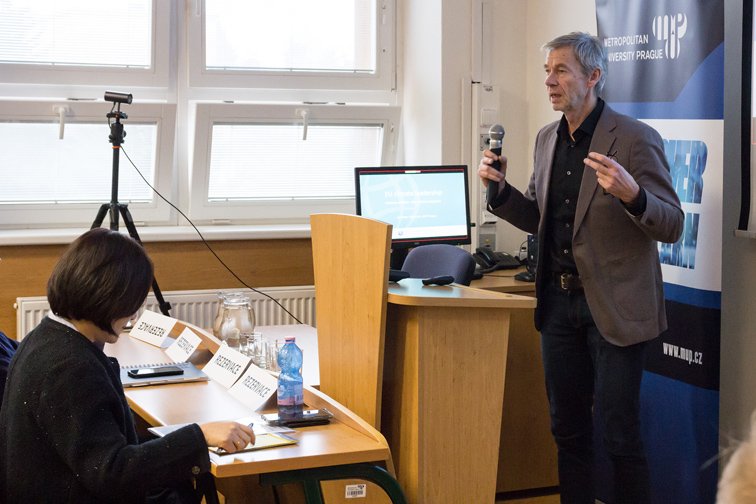
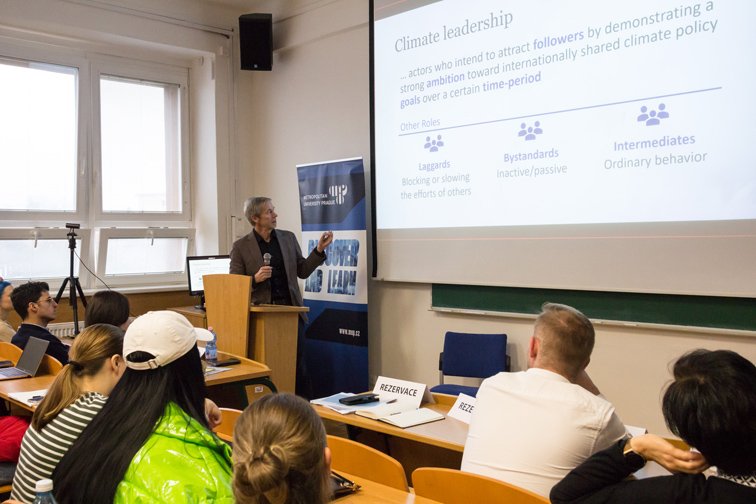
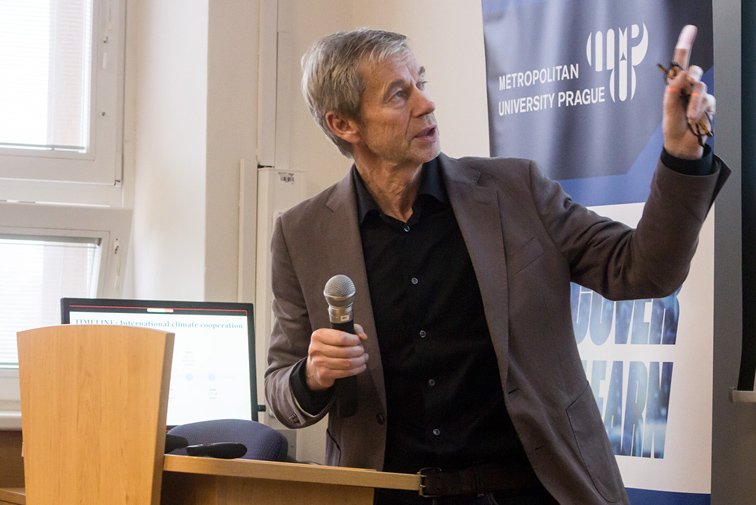
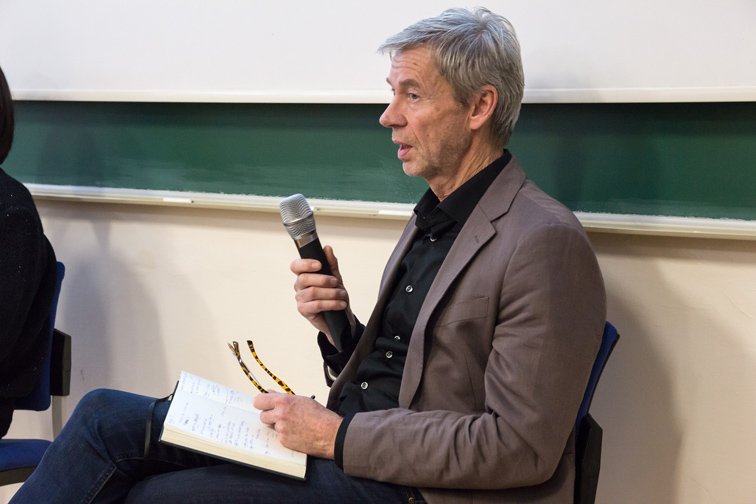
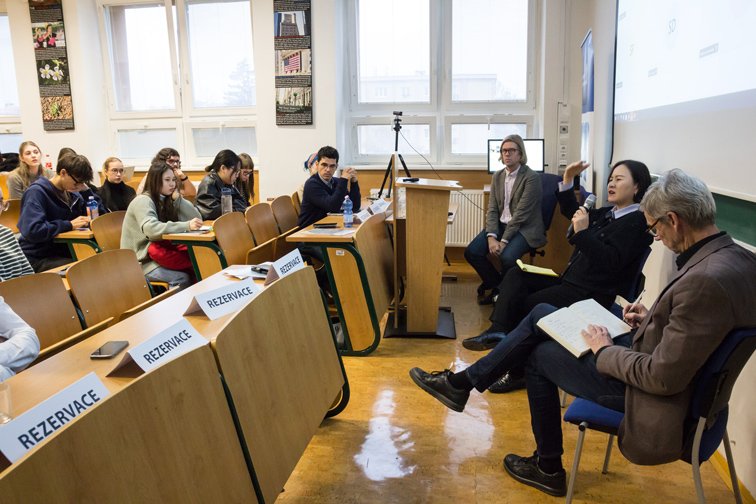
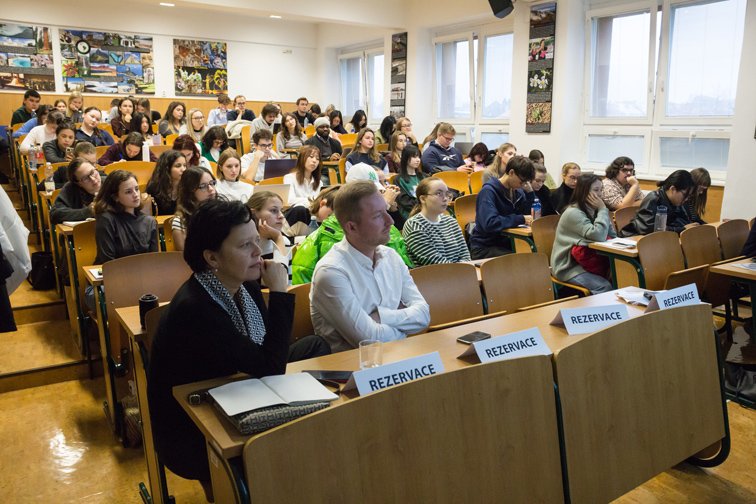
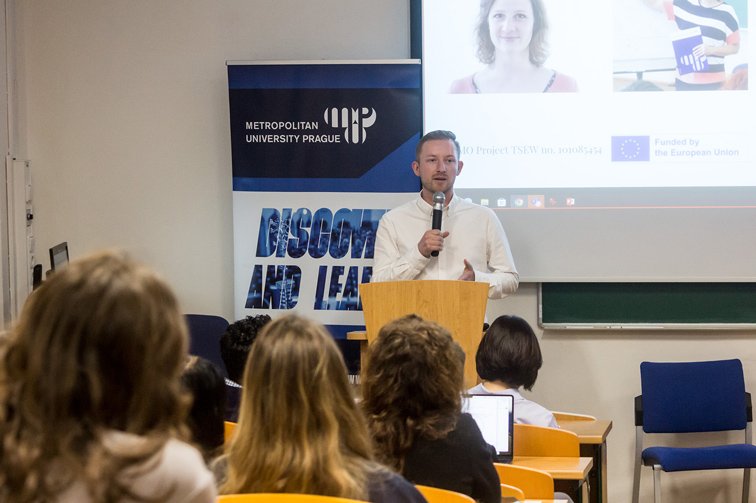
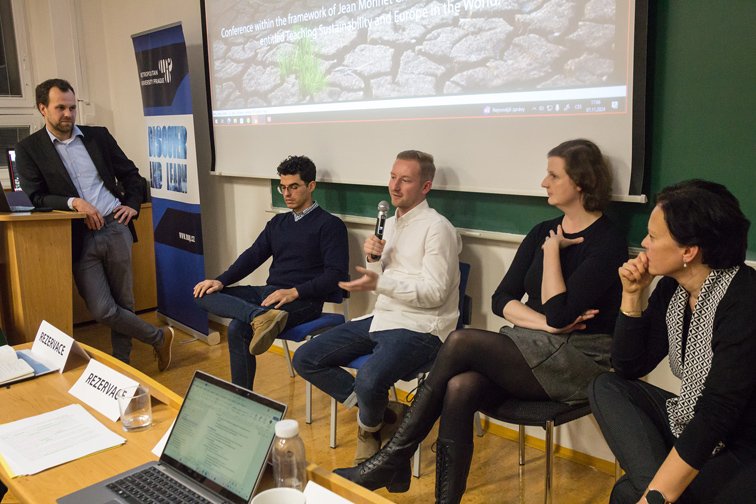
18. 11. 2024 Author: Sasha Kovalevska On November 7th, 2024, the Metropolitan University Prague hosted a conference titled Global Climate Change Mitigation and the Role of the EU. Held under the prestigious Jean Monnet Chair program. The event gathered over 100 students alongside presenting scholars, researchers, and NGO representatives to critically assess the EU’s role in addressing global climate challenges. Centered around the thought-provoking question of whether the EU’s climate leadership is genuinely global or primarily self-serving, the conference featured two insightful panels each followed by fruitful discussions, and was complemented by a plant-based buffet that underscored the event’s green theme.The first panel, Global Climate Leadership? moderated by Mats Braun from Metropolitan University Prague and the Institute of International Relations Prague, examined the EU’s position in the global climate framework. Heejin Han, who traveled to Prague from Pukyong National University in South Korea, discussed how EU initiatives, such as the European Green Deal, serve as benchmarks for climate action globally, particularly in Asia. She also explored how countries like South Korea react to EU policies, including the Carbon Border Adjustment Mechanism (CBAM). Jon Birger Skjaerseth, representing Norway’s Fridtjof Nansen Institute, added depth by analyzing the global climate political architecture and the challenges of EU climate leadership, addressing issues such as the green technology race and the evolving global political landscape.
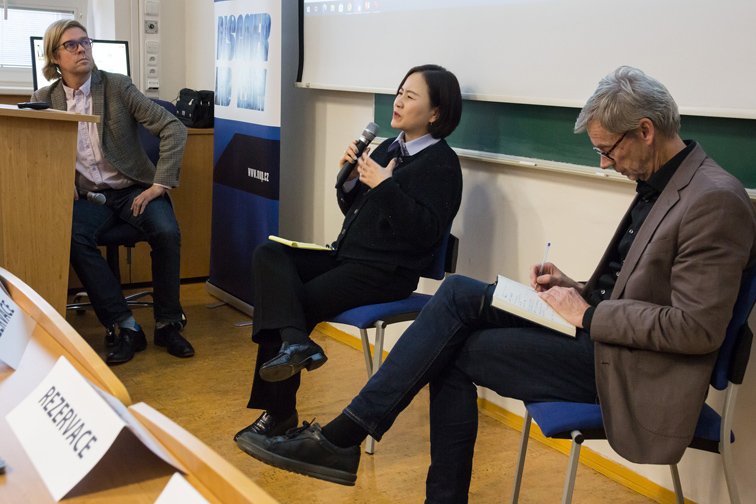
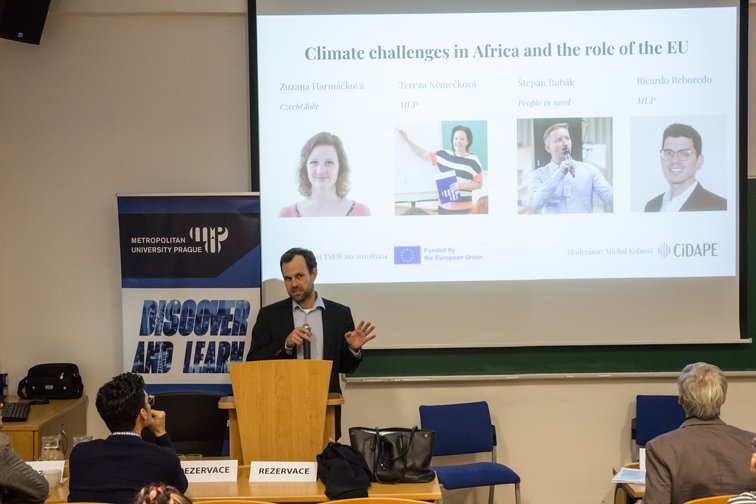
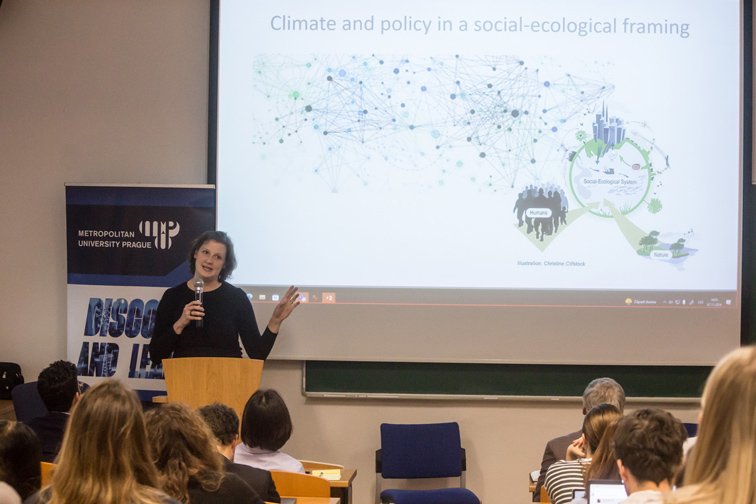
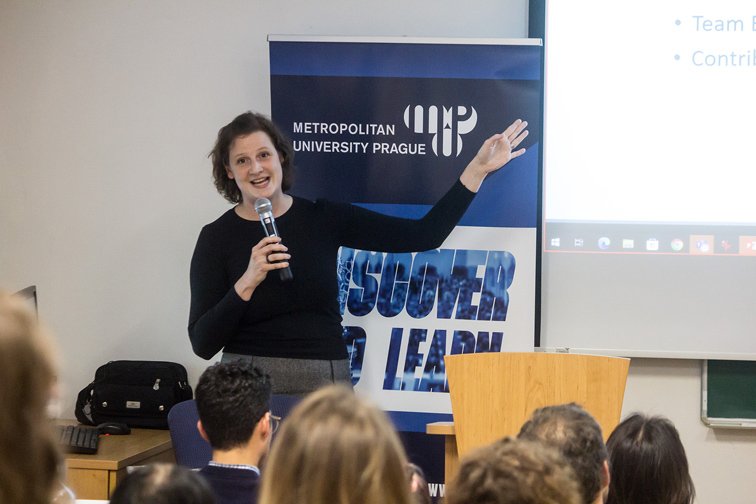
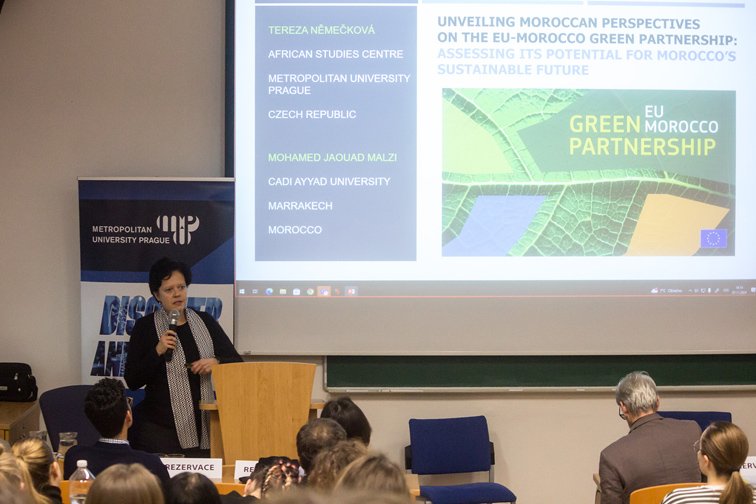
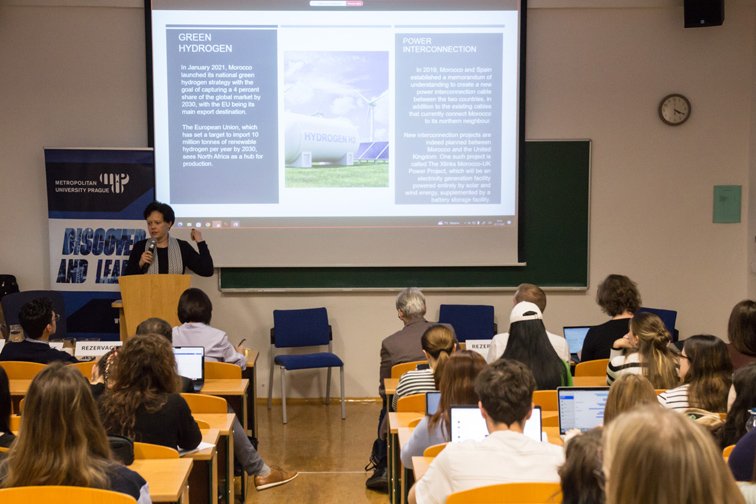
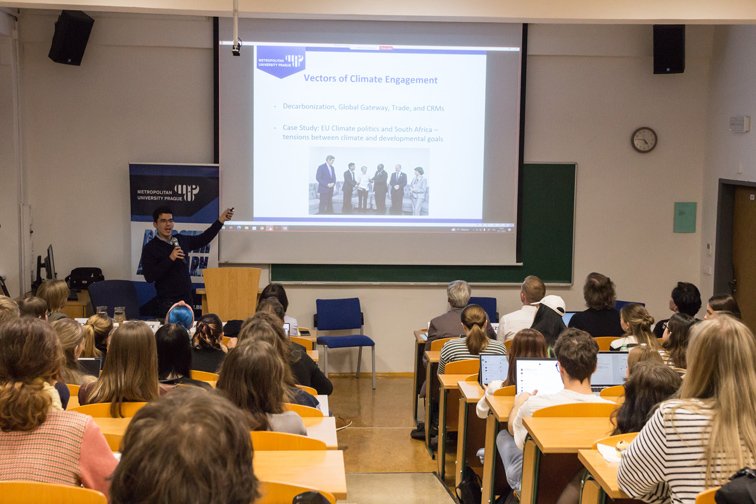
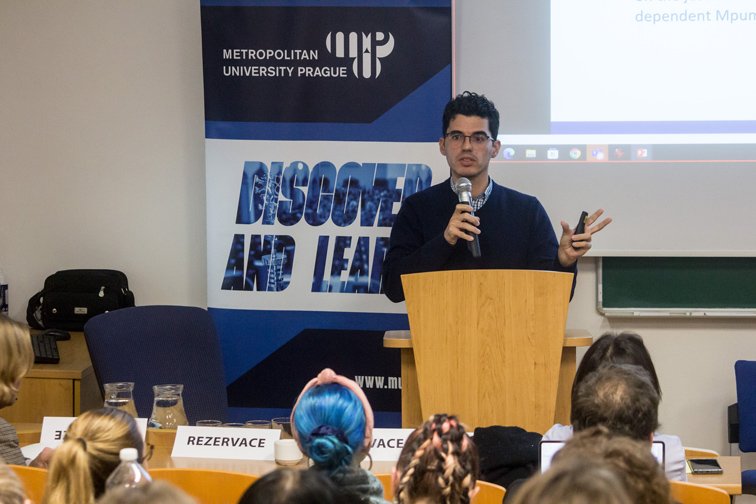
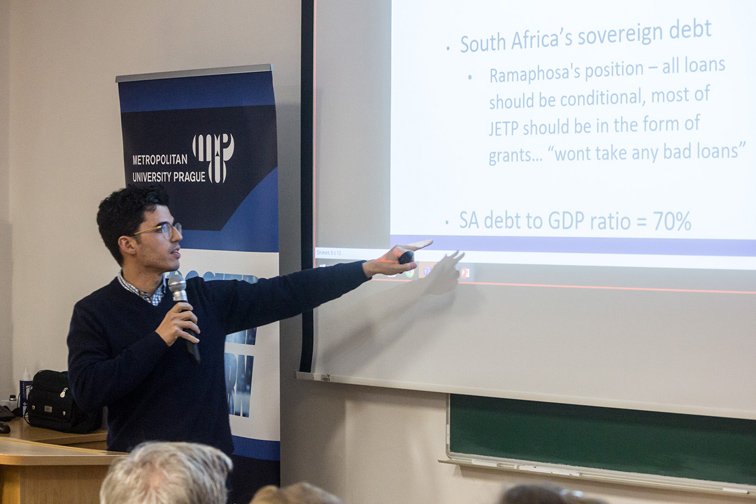
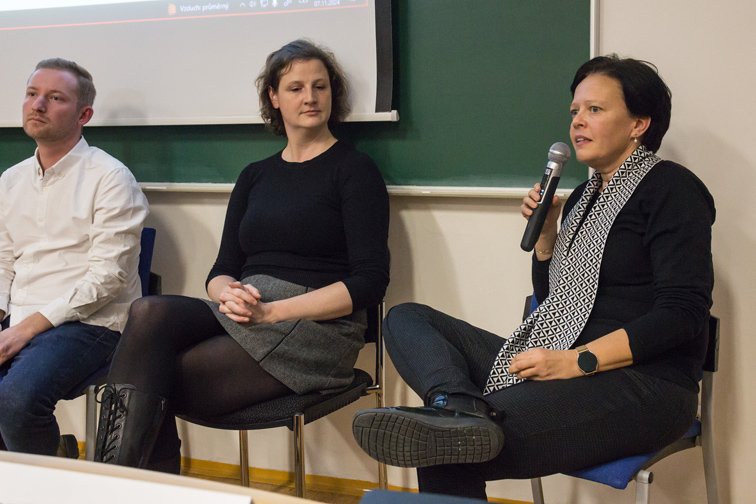
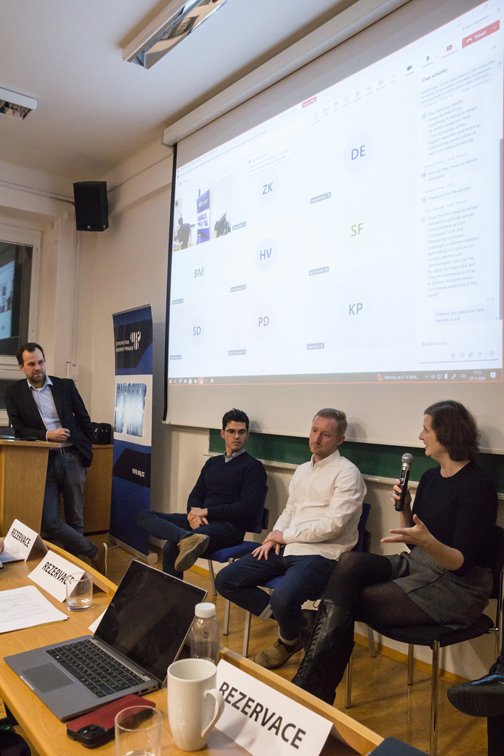
The second panel, Climate Challenges in Africa and the Role of the EU, offered a critical perspective on how EU policies intersect with African realities. Moderated by MUP's Michal Kolmaš, the session began with Zuzana Harmáčková, researcher and head of the Department of Social-Ecological Analysis at the Global Change Research Institute of the Czech Academy of Sciences (CzechGlobe). Zuzana spoke about various levels at which climate policy operates, linking various actors in a complex set of difficult-to-navigate relations. Tereza Němečková, Head of MUP’s Centre for African Studies, then presented her recent research with a Moroccan colleague. She explored the EU-Morocco green partnership, focusing on its potential and challenges for Morocco’s sustainable future. Štěpán Bubák of People in Need, a Czech NGO, provided insights into humanitarian projects in underprivileged regions across countries such as Angola, the Democratic Republic of Congo, Ethiopia, and Zambia. MUP's Ricardo Reboredo concluded the session with a compelling critique of South Africa’s Just Energy Transition Partnership with the EU, questioning whether it represents genuine collaboration or coercive decarbonization favoring the wealthy.
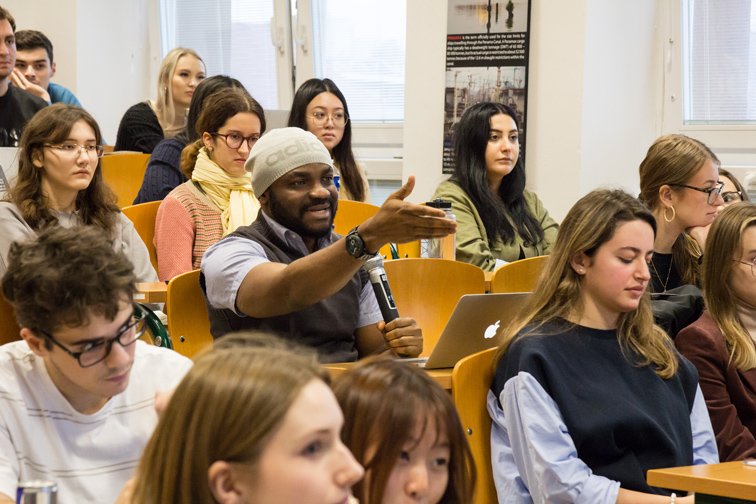
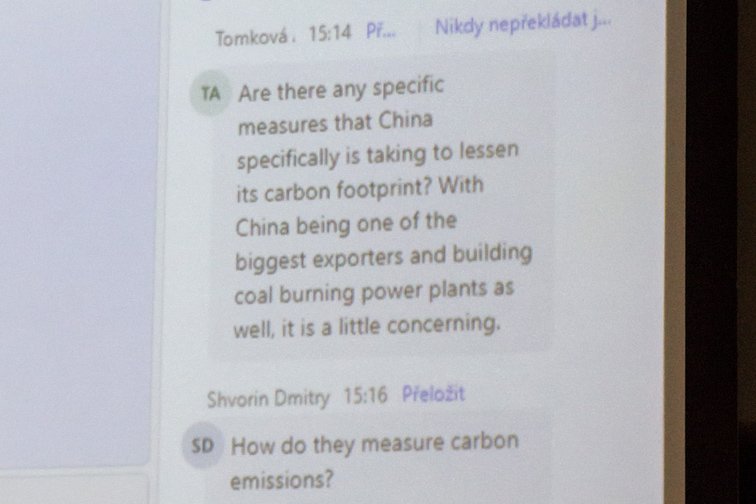
The discussions following both panels raised reflective questions about the challenges to the EU-led global climate cooperation posed by countries like the United States, the rise of new players like China, and whether the EU’s climate leadership could be characterized as green imperialism.
This conference succeeded in sparking meaningful dialogue on the complexities of EU climate leadership. By addressing themes of global governance, power dynamics, and regional perspectives, the event provided a platform for engaging with the multifaceted challenges of climate change. The thoughtful discussions not only highlighted the diversity of perspectives but also left students with a renewed understanding of the stakes involved in global climate action and the EU’s role within it.
Other items from the/this section
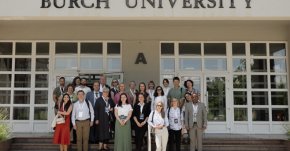 International Staff Week in Sarajevo
Last week, our colleagues from the International Office participated in the International Staff Week hosted by International Burch University in Sarajevo.
International Staff Week in Sarajevo
Last week, our colleagues from the International Office participated in the International Staff Week hosted by International Burch University in Sarajevo.
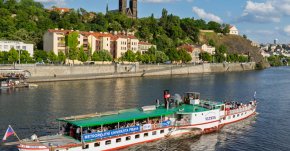 Metropolitan University Prague's Fleet Cruised the Waters of the Vltava
How should a university celebrate its twenty-fifth anniversary? What better way to mark the occasion than with a fleet of MUP steamboats cruising along the Vltava, offering panoramic views of Old Prague, Charles Bridge, Vyšehrad and other landmarks? That would certainly be something special. And that is exactly what happened!
Metropolitan University Prague's Fleet Cruised the Waters of the Vltava
How should a university celebrate its twenty-fifth anniversary? What better way to mark the occasion than with a fleet of MUP steamboats cruising along the Vltava, offering panoramic views of Old Prague, Charles Bridge, Vyšehrad and other landmarks? That would certainly be something special. And that is exactly what happened!
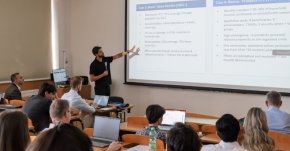 Globalization, Illicit Trade, Sustainability and Security COST Action
MUP hosted the Globalization, Illicit Trade, Sustainability and Security (GLITSS) COST Action Final Book Workshop from 18–20 May 2026 at Metropolitan University Prague.
Globalization, Illicit Trade, Sustainability and Security COST Action
MUP hosted the Globalization, Illicit Trade, Sustainability and Security (GLITSS) COST Action Final Book Workshop from 18–20 May 2026 at Metropolitan University Prague.