


08/02/2017 - Supranational Governance, Brexit and the Fear of Terrorism
Center for Security Studies and the Department of International Relations and European Studies have the pleasure to invite you to a public lecture of Prof. Dr. Christian Kaunert on the topic of Supranational Governance, Brexit and the Fear of Terrorism.WHEN: Wednesday, 8 February 2017, 16:00–17:30
WHERE: MUP Prague-Strašnice building, Dubečská 900/10, Room no. 305
Free entry, no registration required.
Prof. Dr. Christian Kaunert is a full professor of Politics and Academic Director, Institute of European Studies, Vrije Universiteit Brussel
Abstract:
EU cooperation on counter-terrorism is a relatively recent phenomenon. Although operational cooperation on issues of internal security such as terrorism already began in the 1970s amongst European states within the TREVI Group, for a few years, EU achievements in this policy area remained modest. It can therefore be argued that EU counter-terrorism cooperation began in earnest in 2001, as a direct response to the terrorist attacks in the United States on 11 September 2001. Policy developments gradually slowed down as the urgency of the terrorist threat appeared to subside. This period of relative ‘inertia’ ended when EU counter-terrorism policy received a new impetus in the wake of the terrorist attacks in Madrid in March 2004. The EU’s role in countering terrorism has been the object of heated debates in the last decade. There have been diverging assessments in the literature as to the success of EU counter-terrorism cooperation. Some scholars have been rather reserved in their assessment of the EU’s counter-terrorism policy. In contrast, other scholars have been more positive and have emphasized all the progress already accomplished. The very swift adoption of the European Arrest Warrant in the aftermath of 9/11 is of particular note. This chapter will analyse the institutional governance in EU counter-terrorism as a reaction to crises by asking the question: what drives EU policy in this area and what are the implications of Brexit for future policy trajectories? How are issues pushed within the EU? Who acts as an agent of change? How will the UK’s transition out of the EU destabilize or enhance member-state cooperation on counter-terrorism? Building on theoretical work about supranational policy entrepreneurship, this chapter emphasises the role of (1) exogenous shocks, such as 9/11 or the recent attacks on Paris of 13 November 2015, (2) transnational cross-border security threats, and (3) supranational policy entrepreneurs. It will particularly build on the works of Kingdon, further elaborated by Kaunert.
Further information: www.c4ss.cz
Aktuálně
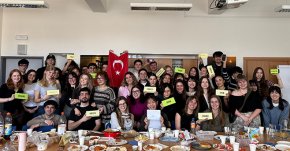 An Event to Remember: MUP International Lunch!
31. 3. 2026 Author: Berkcan Tokyay
On Friday, March 27, taking full advantage of MUP's amazing 'no classes on Fridays' schedule, it was time for our traditional MUP Lunch Event. Over 50 exchange students and also MUP Buddy Team members shared their local foods, drinks and created an international environment for the lunch.
An Event to Remember: MUP International Lunch!
31. 3. 2026 Author: Berkcan Tokyay
On Friday, March 27, taking full advantage of MUP's amazing 'no classes on Fridays' schedule, it was time for our traditional MUP Lunch Event. Over 50 exchange students and also MUP Buddy Team members shared their local foods, drinks and created an international environment for the lunch.
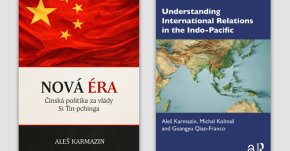 Křest knih o čínské politice a mezinárodních vztazích v Indo-Pacifiku
28. 3. 2026 Autor: redakce
Dne 19. března 2026 se na půdě Metropolitní univerzity Praha uskutečnil křest dvou odborných publikací věnovaných aktuálním geopolitickým otázkám.
Křest knih o čínské politice a mezinárodních vztazích v Indo-Pacifiku
28. 3. 2026 Autor: redakce
Dne 19. března 2026 se na půdě Metropolitní univerzity Praha uskutečnil křest dvou odborných publikací věnovaných aktuálním geopolitickým otázkám.
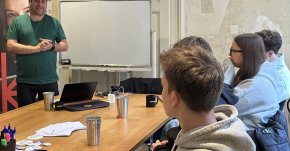 Jak rozhodují mladí?
Dr. Petr Just vedl dne 26.3.2026 interaktivní workshop pro středoškolské studenty na téma "Jak rozhodují mladí?"
Jak rozhodují mladí?
Dr. Petr Just vedl dne 26.3.2026 interaktivní workshop pro středoškolské studenty na téma "Jak rozhodují mladí?"