


04/05/2015 - Sharia Law and The Powers That Be in Brunei and Malaysia: A Comparative Perspective
The Centre for Indo-Pacific Studies and the Oriental Institute of the Czech Academy of Sciences have the pleasure to invite you to a special guest lecture of Dr. Dominik Müller on the topic of Sharia Law and The Powers That Be in Brunei and Malaysia: A Comparative Perspective.WHEN: 4 May 2015, from 17:30 to 19:00
WHERE: MUP Praha-Strašnice building, Dubečská 900/10, room 205
The lecture will be moderated by Dr. Tomáš Petrů from Oriental Institute of the Czech Academy of Sciences.
Following the localization of Islamic revivalism since the 1980s, codified Sharia Law has acquired increasingly powerful positions in the neighboring countries of Brunei Darussalam and Malaysia. In some aspects, this development has led to sharp criticism from secular observers and international human rights organizations. Alternative interpretations of Islam have become outlawed as “deviant teachings” (ajaran sesat), while state-based Islamic authorities deploy sanctions to protect the “pure faith” (aqidah) and their own monopoly to define it. Both states have also, to varying degrees, established forms of moral policing and prosecute a growing corpus of “Sharia crimes” (jenayah Syariah), with significant popular support. Most controversially, the government of Brunei has recently enforced a far-reaching legal reform that carries maximum penalties such as stoning to death for offences like apostasy, adultery, homosexual intercourse, and blasphemy.
Although at least in Malaysia some civil society actors defend more pluralistic visions of Sharia-based normativity, they are in an increasingly marginalized and legally precarious position. In Brunei, however, such voices are largely absent from public discourse. Considering the realities of Islamic governance in the contemporary Malay World, once widespread notions of an intrinsically “tolerant” Southeast Asian Islam are increasingly called into question.
Dr. Dominik Müller studied Anthropology, Law and Philosophy at Goethe-University Frankfurt and Leiden University, and obtained his Ph.D. summa cum laude from Frankfurt in 2012. At his home institution in Frankfurt, the Cluster of Excellence “Normative Orders”, Müller is a post-doctoral researcher. He held fellowships at Stanford University (2013), the University of Brunei Darussalam (2014), and was most recently a visiting Senior Member at St Antony’s College, University of Oxford. He also did research for the Jakarta-based Human Rights Resource Centre (HRRC) and the German government’s Deutsche Gesellschaft für Internationale Zusammenarbeit (GIZ) in 2014. His articles have been published by South East Asia Research (2010), Paideuma (2013), Asian Survey (forthcoming), and Indonesia and the Malay World. Müller’s thesis, entitled Islam, Politics and Youth in Malaysia: The Pop-Islamist Reinvention of PAS, received the award for Germany’s best anthropological dissertation of 2012 and was published by Routledge in 2014.
Aktuálně
 Elektrizující atmosféra a plný klub: MUP Night zakončila školní rok ve velkém stylu
27. 6. 2026 Autoři: Dominik Borek, Sebastian Szaban
The end of the school year party se uskutečnila v klubu The Pitch a proběhla ve skvělé atmosféře plné hudby, zábavy a dobré nálady.
Elektrizující atmosféra a plný klub: MUP Night zakončila školní rok ve velkém stylu
27. 6. 2026 Autoři: Dominik Borek, Sebastian Szaban
The end of the school year party se uskutečnila v klubu The Pitch a proběhla ve skvělé atmosféře plné hudby, zábavy a dobré nálady.
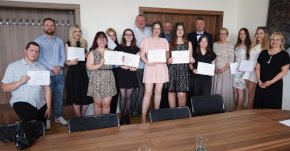 Profesní certifikáty GSA v oblasti marketingu leteckých společností a destinačního managementu
23. 6. 2026 Autor: Nora Dolanská
Slavnostním předáním certifikátů studentům, kteří absolvovali kurz pro General Sales Agenty v oblasti marketingu leteckých společností a destinačního managementu, letos poprvé vyvrcholila doplňková výuka bakalářského i magisterského studia na Katedře cestovního ruchu.
Profesní certifikáty GSA v oblasti marketingu leteckých společností a destinačního managementu
23. 6. 2026 Autor: Nora Dolanská
Slavnostním předáním certifikátů studentům, kteří absolvovali kurz pro General Sales Agenty v oblasti marketingu leteckých společností a destinačního managementu, letos poprvé vyvrcholila doplňková výuka bakalářského i magisterského studia na Katedře cestovního ruchu.
 Studenti Digitální ekonomiky se podíleli na nové studii Czech Founders
3. 6. 2026 Autor: Dominik Stroukal
Startupy zvažují odchod z ČR, ukazují studenti Digitální ekonomiky Martin Přech a Jakub Hunák v nově vydané studii. Pomoci může evropský „28. režim“, má to však háček. Aktuální data ukazují, že více než čtvrtina českých zakladatelů startupů (27,2 %) zvažuje přesun svého sídla do zahraničí. Tento odchod často není pouhým rozmarem, ale přímým požadavkem investorů. Celých 59,5 % startupů se zahraničním kapitálem dostalo doporučení relokovat se do zemí s příznivější legislativou, jako je Irsko, Velká Británie, Nizozemsko nebo USA.
Studenti Digitální ekonomiky se podíleli na nové studii Czech Founders
3. 6. 2026 Autor: Dominik Stroukal
Startupy zvažují odchod z ČR, ukazují studenti Digitální ekonomiky Martin Přech a Jakub Hunák v nově vydané studii. Pomoci může evropský „28. režim“, má to však háček. Aktuální data ukazují, že více než čtvrtina českých zakladatelů startupů (27,2 %) zvažuje přesun svého sídla do zahraničí. Tento odchod často není pouhým rozmarem, ale přímým požadavkem investorů. Celých 59,5 % startupů se zahraničním kapitálem dostalo doporučení relokovat se do zemí s příznivější legislativou, jako je Irsko, Velká Británie, Nizozemsko nebo USA.