

06/03/2014 - Islam and Pluralism in Indonesia: Inspiration for Europe?
On 6 March 2014, the Centre for Asia Pacific Studies held an international seminar on Islam and Pluralism in Indonesia.<br />Speakers: Dr Ahmad Suaedy, Dr Syafiq Hasyim, Dr Hynek Kmoníček
The ten years of President Susilo Bambang Yudhoyono's administration have seen the rise of religious intolerance driven by radical Islamism, affecting all communities through discriminatory legislation, inflammatory rhetoric by some Government ministers, and a consistent failure to protect minorities, promote the rule of law and uphold justice. With parliamentary and presidential elections in 2014, there is now a real urgency, as well as an opportunity, to act to prevent further erosion of Indonesia's pluralism and to pull back from the path of intolerance which has been termed by some as a process of 'Pakistanisation'.
The individual presentations and ensuing discussion focused, among others, on the following topics:
- Is there really a growing religious intolerance in Indonesia or are the extreme voices of Islam still confined to the 'edges' of the mainstream Muslim community?
- Has democracy in Indonesia contributed, or rather undermined, religious tolerance and harmony in Indonesia?
- Being one of the most diverse societies, comprising of many religious and ethnic groups, what can Europe learn from the Indonesian experience of managing diversity?
- With the growing number of immigrants in Europe, what policies should the governments (with a special reference to the Czech Republic) implement to avoid a similar escalation of tensions between the Muslim migrants and the mainstream population, like in the UK and France in the past?
Dr Suaedy suggested that there is a big difference between Indonesia and other Muslim countries in that the former has a very powerful Muslim civil society. Dr Hasyim expressed the view that Islamophobia in Europe in general is still a bit problematic. In the context of Europe, it is clear that the debate over multiculturalism largely refers to Islam in the West. Growing anti-immigration and anti-Muslim sentiments have been fuelled by the belief that Muslims are not "willing" enough to integrate themselves in society. In some ways it can be argued that the "Islamization of Europe" is an over exaggerated fear, as religious extremists behind attacks are not representative of the population as a whole. Integration does not require assimilation; rather, it is about equal opportunity, mutual tolerance, and constant interaction among distinct social identities and cultures.
After the seminar, there was a refreshment of Indonesian delicacies.
 Photo Gallery
Aktuálně
 Co divák doma nevidí. Studenti MUP usedli do publika Zuperdebaty na CNN Prima News
9. 10. 2026 Autor: Barbora Vošahlíková
Jedinečnou příležitost nahlédnout do televizního vysílání z bezprostřední blízkosti dostali studenti Metropolitní univerzity Praha. Ve středu 30. září se na pozvání CNN Prima NEWS zúčastnili jako publikum předvolební Zuperdebaty, ve které se utkali mladí političtí kandidáti do 30 let, tedy zástupci generace Z.
Co divák doma nevidí. Studenti MUP usedli do publika Zuperdebaty na CNN Prima News
9. 10. 2026 Autor: Barbora Vošahlíková
Jedinečnou příležitost nahlédnout do televizního vysílání z bezprostřední blízkosti dostali studenti Metropolitní univerzity Praha. Ve středu 30. září se na pozvání CNN Prima NEWS zúčastnili jako publikum předvolební Zuperdebaty, ve které se utkali mladí političtí kandidáti do 30 let, tedy zástupci generace Z.
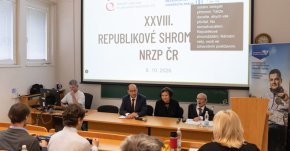 Metropolitní univerzita Praha hostí 28. republikové shromáždění NRZP ČR
8. 10. 2026 Autor: redakce
Je nám potěšením, že Metropolitní univerzita Praha spolupořádá ve svých prostorách 28. republikové shromáždění Národní rady osob se zdravotním postižením ČR (NRZP ČR).
Metropolitní univerzita Praha hostí 28. republikové shromáždění NRZP ČR
8. 10. 2026 Autor: redakce
Je nám potěšením, že Metropolitní univerzita Praha spolupořádá ve svých prostorách 28. republikové shromáždění Národní rady osob se zdravotním postižením ČR (NRZP ČR).
 Studenti MUP s Miss World a příšerkami vyráží do škol zlepšit finanční gramotnost
7. 10. 2026 Autor: Dominik Stroukal
Jak zábavnou formou přiblížit dětem a mladým lidem svět financí? O to se snaží vzdělávací aplikace Money Monsters, za kterou stojí ekonom a garant studijního programu Digitální ekonomika na MUP dr. Dominik Stroukal a Miss World Krystyna Pyszková.
Studenti MUP s Miss World a příšerkami vyráží do škol zlepšit finanční gramotnost
7. 10. 2026 Autor: Dominik Stroukal
Jak zábavnou formou přiblížit dětem a mladým lidem svět financí? O to se snaží vzdělávací aplikace Money Monsters, za kterou stojí ekonom a garant studijního programu Digitální ekonomika na MUP dr. Dominik Stroukal a Miss World Krystyna Pyszková.