


South African Business Students Visited MUP
Author: Tereza Němečková On Monday, the 15th May 2023, and Tuesday, the 16th May 2023, MUP had the honour of welcoming a group of business students from our partner university in Pretoria, South Africa. Eleven students from the Tshwane School for Business and Society, accompanied by Professor Robinson, had the opportunity to experience two days of interactions with MUP students and Czech business representatives.Within the framework of the MUP African Studies Centre, academic cooperation with several African universities has recently been expanded. One of these universities is the Tshwane School of Technology, located in Pretoria, South Africa, which includes the Tshwane School for Business and Society, the leading business school in the country. The School Director, Prof. Kobus Jonker, personally visited MUP last year to discuss various forms of cooperation. Among others, as a management professional, he delivered an online lecture earlier this year to our business students on disruptive technologies and their transformative power in African markets.
The program scheduled for the South African students included on the first day seminars with representatives from two Czech companies operating in the global market. The first company was Actum Digital, which provides various services to partners for managing experiences, commerce, business processes, content, and data at scale. Actum Digital, initially established as a student initiative several years ago, has grown into a global business delivering services to partners such as Christie's, one of the world's largest auction houses. The second company was Linet, the leading manufacturer of advanced care beds worldwide. In both cases, students learned and discussed various aspects of global expansion and conducting international business. All were grateful for openness with which representatives from both companies shared their experiences with them.
On the second day, the students were welcomed at MUP. During the first sessions, they interacted with International Business Master's students and mutually presented their countries as trade opportunities. In the following session, they engaged with International Business Bachelor's students and discussed the specifics of business negotiations. In the evening, the students continued with informal interactions over drinks. The entire day was filled with numerous interesting presentations, discussions, and interactions. Everyone was amazed by the professional performance of the South African students and the lively atmosphere they brought to the final week of our semester.
With my deepest gratitude, I would like to express my thanks to all the participants in those events and to the South African students visiting our university for the unique opportunity to share our views and experiences on business matters. We hope to welcome another cohort of students at MUP soon.


Other items from the/this section
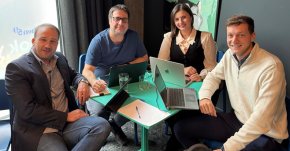 The SMILE Project Enters Its Final Phase: Focus on Practical Outputs and Workshops
The SMILE project, which aims to strengthen leadership skills, digital skills, and media literacy among young people in rural areas of the Danube region, entered its final year this fall.
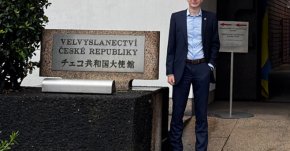 From MUP to the Czech Embassy in Tokyo
12. 11. 2026 Author: Adam Outrata
My name is Adam and I am a student of the 5th semester of my bachelor's degree in International Relations – European Studies. But currently I am an intern at the Embassy of the Czech Republic in Tokyo, Japan, in the commercial and economic section of the embassy. In addition to my studies at MUP, I got this opportunity thanks to an exchange study stay in Denmark at Aarhus University, where I studied Political Science.
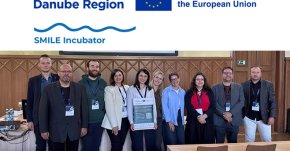 University Representatives and the SMILE Project Team at the CEPSA Anniversary Conference
The prestigious two-day conference organized to mark the 30th anniversary of the Central European Political Science Association (CEPSA) welcomed academics and scholars from all around Europe and the world. This significant event, which is a living proof of successful cross-border academic cooperation, offered a rich program full of panel discussions and round tables on various socioeconomic and political academic papers.