


21/11/2017 - Securitizing Energy: From Geopolitics to Energy Democracy
Center for Security Studies cordially invites you to postdoc public lecture "Securitizing Energy: From Geopolitics to Energy Democracy" by Izabela Surwillo.WHEN: Tuesday, 21 November 2017, 16:00–17:30
WHERE: MUP Prague-Strašnice building, Dubečská 900/10, room no. 305
Free entry, no registration required.
Abstract: Energy security emerged as one of the ‘new’ security issues in the post-Cold War era. Due to its ‘total’ character it impacts all sectors of human activity as well as other security areas – political, societal and environmental included. However, the vast majority of energy security analysis tends to focus on the local and global market forces and narrowly defined economic indicators for operationalizing energy security. The mainstream research is also primarily conducted from a limited methodological perspective that often relies on economic modeling, but rarely includes qualitative data that would give more consideration to the multiplicity of local actors, agendas and perspectives. Yet, the contextual analysis of the energy security phenomenon shows that the realist focus on the geopolitics of gas/oil supply and the ‘zero-sum’ game of pipeline politics are only a part of the story. Similarly to the analysis of climate security, the security dynamics of the contemporary energy sector defies the logic of exception as the dominant and universal logic of security. Namely, not only the logic of risk, war and subsistence shape local energy security agendas, but the emerging logic of emancipation increasingly plays a role in different national settings. Characterized by the gradual democratization of energy systems, individuals as the referent objects of security, the rhetoric of social empowerment/liberation and reflexive security practice – the energy security logic of emancipation marks yet another mutation of the meaning and practice of energy security and has important policy consequences for the domestic contexts. The presentation will look at this phenomenon in greater detail at the example of Germany, Poland and Ukraine.
Aktuálně
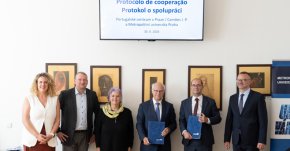 Portugalštinu na MUP podpoří institut Camões
1. 10. 2026 Autor: Jan Haňka
Na MUP máme další důvod říct „olá“! Ve středu 30. září 2026 bylo na Metropolitní univerzitě Praha podepsáno memorandum o spolupráci s institutem Camões. Přinese podporu výuky portugalštiny i příležitosti poznávat kultury portugalsky mluvících zemí. Slavnostní setkání přitom provázela výborná nálada a velmi přátelská atmosféra.
Portugalštinu na MUP podpoří institut Camões
1. 10. 2026 Autor: Jan Haňka
Na MUP máme další důvod říct „olá“! Ve středu 30. září 2026 bylo na Metropolitní univerzitě Praha podepsáno memorandum o spolupráci s institutem Camões. Přinese podporu výuky portugalštiny i příležitosti poznávat kultury portugalsky mluvících zemí. Slavnostní setkání přitom provázela výborná nálada a velmi přátelská atmosféra.
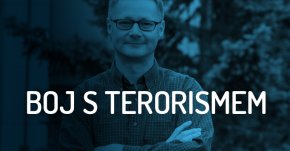 Co odlišuje terorismus od jiných forem násilí
16. 8. 2026 Autor: redakce
Prof. Oldřich Bureš z Katedry mezinárodních vztahů a evropských studií se zúčastnil zajímavé diskuze, respektive natáčení dílu podcastu 10:35 na téma Co odlišuje terorismus od jiných forem násilí. Společně s Vojtěchem Šimákem a Petrem Mlejnkem byly diskutovány soudobé i historické aspekty terorismu.
Co odlišuje terorismus od jiných forem násilí
16. 8. 2026 Autor: redakce
Prof. Oldřich Bureš z Katedry mezinárodních vztahů a evropských studií se zúčastnil zajímavé diskuze, respektive natáčení dílu podcastu 10:35 na téma Co odlišuje terorismus od jiných forem násilí. Společně s Vojtěchem Šimákem a Petrem Mlejnkem byly diskutovány soudobé i historické aspekty terorismu.
 Elektrizující atmosféra a plný klub: MUP Night zakončila školní rok ve velkém stylu
27. 6. 2026 Autoři: Dominik Borek, Sebastian Szaban
The end of the school year party se uskutečnila v klubu The Pitch a proběhla ve skvělé atmosféře plné hudby, zábavy a dobré nálady.
Elektrizující atmosféra a plný klub: MUP Night zakončila školní rok ve velkém stylu
27. 6. 2026 Autoři: Dominik Borek, Sebastian Szaban
The end of the school year party se uskutečnila v klubu The Pitch a proběhla ve skvělé atmosféře plné hudby, zábavy a dobré nálady.