

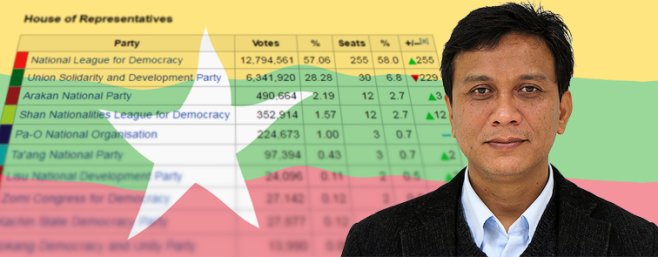
10/05/2016 - Politics of Change in Myanmar after the 2015 Elections
The Department of Asian Studies and the Centre for Indo-Pacific Studies have the pleasure to invite you to a special guest lecture of visiting professor Sai Khaing Myo Tun from the Department of Development Studies of University of Vienna, on the topic of Politics of Change in Myanmar after the 2015 Elections.WHEN: 10 May 2016, 16:00–17:30
WHERE: MUP Prague-Strašnice building, Dubečská 900/10, room 305
The general elections of November 2015 have been a major turning point in Myanmar history: The first free and fair election after decades of military rule are a pivotal point in the country's reform process which was started in 2010 and which has brought about a massive political, economical and social change ever since.
After the clear success of Aung San Suu Kyi and her National League for Democracy (NLD), the balance of power in the new parliament has shifted towards civil forces. The declaration of the military party that they will respect the results of the elections and the recent self-restraint of the NLD to abstain from the winner takes it all-attitudes were promising news.
After the first convention of the new parliament on 1st February, the election of a new president and the formation of a new government were crucial stepping stones for the new distribution of power. However, Myanmar's political institutions are still very young and it has to be seen in how far the process of handing over the political power from the military dominated government to a civil administration will succeed.
Dr. Sai Khaing Myo Tun is a visiting professor at the Department of Development Studies of University of Vienna. In Myanmar, he is a lecturer at the Department of International Relations of Monywar University and the Associate Professor at Center for Strategic and International Studies, Yangon, Myanmar. He is also the vice-president of Myanmar Teachers’ Federation (MTF) since 2015 while he has been involved in the forming of unions and a labour federation in the country since 2012. His research areas include state-building in Asia, state-building of Myanmar, Labour Movement and Freedom of Association in Myanmar and the international relations of Myanmar. In the University of Vienna, he is leading and teaching in a seminar on the State-led Development and Developmental State in Asia and Africa.
Aktuálně
 Portugalštinu na MUP podpoří institut Camões
1. 10. 2026 Autor: Jan Haňka
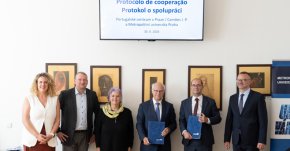
Na MUP máme další důvod říct „olá“! Ve středu 30. září 2026 bylo na Metropolitní univerzitě Praha podepsáno memorandum o spolupráci s institutem Camões. Přinese podporu výuky portugalštiny i příležitosti poznávat kultury portugalsky mluvících zemí. Slavnostní setkání přitom provázela výborná nálada a velmi přátelská atmosféra.
Portugalštinu na MUP podpoří institut Camões
1. 10. 2026 Autor: Jan Haňka
Na MUP máme další důvod říct „olá“! Ve středu 30. září 2026 bylo na Metropolitní univerzitě Praha podepsáno memorandum o spolupráci s institutem Camões. Přinese podporu výuky portugalštiny i příležitosti poznávat kultury portugalsky mluvících zemí. Slavnostní setkání přitom provázela výborná nálada a velmi přátelská atmosféra.
 Co odlišuje terorismus od jiných forem násilí
16. 8. 2026 Autor: redakce
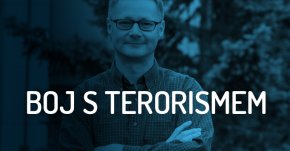
Prof. Oldřich Bureš z Katedry mezinárodních vztahů a evropských studií se zúčastnil zajímavé diskuze, respektive natáčení dílu podcastu 10:35 na téma Co odlišuje terorismus od jiných forem násilí. Společně s Vojtěchem Šimákem a Petrem Mlejnkem byly diskutovány soudobé i historické aspekty terorismu.
Co odlišuje terorismus od jiných forem násilí
16. 8. 2026 Autor: redakce
Prof. Oldřich Bureš z Katedry mezinárodních vztahů a evropských studií se zúčastnil zajímavé diskuze, respektive natáčení dílu podcastu 10:35 na téma Co odlišuje terorismus od jiných forem násilí. Společně s Vojtěchem Šimákem a Petrem Mlejnkem byly diskutovány soudobé i historické aspekty terorismu.
 Elektrizující atmosféra a plný klub: MUP Night zakončila školní rok ve velkém stylu
27. 6. 2026 Autoři: Dominik Borek, Sebastian Szaban
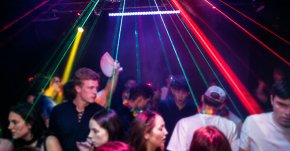
The end of the school year party se uskutečnila v klubu The Pitch a proběhla ve skvělé atmosféře plné hudby, zábavy a dobré nálady.
Elektrizující atmosféra a plný klub: MUP Night zakončila školní rok ve velkém stylu
27. 6. 2026 Autoři: Dominik Borek, Sebastian Szaban
The end of the school year party se uskutečnila v klubu The Pitch a proběhla ve skvělé atmosféře plné hudby, zábavy a dobré nálady.