


26/04/2016 - Human security in EU foreign policy: Lessons from the Pacific
The Department of Asian Studies and the Centre for Indo-Pacific Studies have the pleasure to invite you to a special guest lecture of Dr. Evangelos Fanoulis from the Centre for Security Studies, MUP, on the topic of Human security in EU foreign policy: Lessons from the Pacific.WHEN: 26 April 2016, 17:00–19:00
WHERE: MUP Prague-Strašnice building, Dubečská 900/10, room 205
Please be so kind as to confirm your attendance at http://registrace.mup.cz
The debate on EU's actorness has been thriving for at least two decades now. Related research questions have primarily focused on whether the EU acts with one voice in the world and whether it does so effectively. Corresponding empirical investigations have analysed the EU's presence in its neighbourhood, the relations with international and regional organisations, the partnerships of the EU with powerful nation-states (U.S.A., Russia, China to name but a few). Little do we know, though, about the role and presence of the EU in sub-systems of the international system, in which the EU and its member-states have not, at first glance at least, immediate interests. Along these lines, this book paper examines whether the EU is a human security provider in the Pacific. The first section of the chapter briefly presents the concept of human security, how it has been perceived in EU circles and how it relates with EU foreign policy in general. The second section provides a systematic empirical analysis of the means that the EU employs to offer human security and uses the case of the Pacific as a concrete example. Foreign policy instruments, development, trade, humanitarian aid, global health and environmental instruments are assessed. The concluding remarks discuss about how EU's presence in the Pacific as a human security provider may shed new light both on EU's actorness and on the dynamics of EU foreign policy.
Dr Evangelos Fanoulis is postdoctoral research fellow at the Centre for Security Studies (C4SS), Metropolitan University Prague. He was previously Lecturer in Politics at the University of Leicester and Fellow at the University of Essex. He received training at the EU Commission, worked as Research Officer for the FP7 ANVIL (Analysis of Civil Security Systems in Europe) project, and served in the Greek ground forces. His publications include: ‘’Understanding the Social Construction of the Democratic Deficit in CSDP: A Foucauldian Approach’, European Security; and co-authored with Kirchner and Dorussen ‘Civil security in the EU: national persistence versus EU ambitions?’ European Security. Further, he has contributed with book chapters in four edited volumes. His main research interests lie within EU democracy, European security governance, civil, non-traditional and human security.
Aktuálně
 Co odlišuje terorismus od jiných forem násilí
16. 8. 2026 Autor: redakce
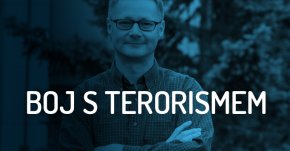
Prof. Oldřich Bureš z Katedry mezinárodních vztahů a evropských studií se zúčastnil zajímavé diskuze, respektive natáčení dílu podcastu 10:35 na téma Co odlišuje terorismus od jiných forem násilí. Společně s Vojtěchem Šimákem a Petrem Mlejnkem byly diskutovány soudobé i historické aspekty terorismu.
Co odlišuje terorismus od jiných forem násilí
16. 8. 2026 Autor: redakce
Prof. Oldřich Bureš z Katedry mezinárodních vztahů a evropských studií se zúčastnil zajímavé diskuze, respektive natáčení dílu podcastu 10:35 na téma Co odlišuje terorismus od jiných forem násilí. Společně s Vojtěchem Šimákem a Petrem Mlejnkem byly diskutovány soudobé i historické aspekty terorismu.
 Elektrizující atmosféra a plný klub: MUP Night zakončila školní rok ve velkém stylu
27. 6. 2026 Autoři: Dominik Borek, Sebastian Szaban
The end of the school year party se uskutečnila v klubu The Pitch a proběhla ve skvělé atmosféře plné hudby, zábavy a dobré nálady.
Elektrizující atmosféra a plný klub: MUP Night zakončila školní rok ve velkém stylu
27. 6. 2026 Autoři: Dominik Borek, Sebastian Szaban
The end of the school year party se uskutečnila v klubu The Pitch a proběhla ve skvělé atmosféře plné hudby, zábavy a dobré nálady.
 Profesní certifikáty GSA v oblasti marketingu leteckých společností a destinačního managementu
23. 6. 2026 Autor: Nora Dolanská
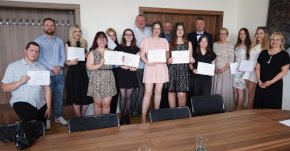
Slavnostním předáním certifikátů studentům, kteří absolvovali kurz pro General Sales Agenty v oblasti marketingu leteckých společností a destinačního managementu, letos poprvé vyvrcholila doplňková výuka bakalářského i magisterského studia na Katedře cestovního ruchu.
Profesní certifikáty GSA v oblasti marketingu leteckých společností a destinačního managementu
23. 6. 2026 Autor: Nora Dolanská
Slavnostním předáním certifikátů studentům, kteří absolvovali kurz pro General Sales Agenty v oblasti marketingu leteckých společností a destinačního managementu, letos poprvé vyvrcholila doplňková výuka bakalářského i magisterského studia na Katedře cestovního ruchu.