


12/11/2015 - ASEAN Regional and EU-ASEAN Interregional Integrative Dynamics in the Aftermath of Cross-border Challenges
The Department of Asian Studies and the Centre for Indo-Pacific Studies have the pleasure to invite you to a special guest lecture of Dr. Naila Maier-Knap on the topic of ASEAN Regional and EU-ASEAN Interregional Integrative Dynamics in the Aftermath of Cross-border Challenges.WHEN: 12 November 2015, 17:30-19:00
WHERE: MUP Strašnice building, Dubečská 900/10, 100 31 Praha 10, room 205
Synopsis:
Since the signing of the Joint Statement on Political Issues in 1980, inter-regional dialogue on politico-security issues between the Association of Southeast Asian Nations (ASEAN) and the European Communities/European Union (EU) has expanded and deepened gradually over the decades. The successful implementation of the Aceh Monitoring Mission, the first-ever visit of the EU Military Committee chairperson to the ASEAN Secretariat in 2009 and the Statement 140508/04 on the South China Sea in 2014 are recent instances suggesting enhanced acknowledgement of the security dimension within this relationship.
In spite of these and other recent spurs of ASEAN-EU security activism, Southeast Asian intra-regional politics and extra-regional alliances offer limited room for strategic latecomers and soft power impact on the regional security architecture. If one defines the inter-regional relationship along the lines of a broad and human-oriented understanding of security and perceives the EU as an actor constitutive of the member states - alongside the European External Action Service, there may be greater opportunity to conceptualise the EU as a security partner to ASEAN. At the same time, it is questionable if such framings reflect EU interests and identity credibly.
Against this empirical and theoretical backdrop, the lecture discusses the central constraints to the ASEAN-EU inter-regional security relationship to identify the EU's opportunity to engage. Building on this discussion, the lecture then examines the efforts of ASEAN-EU politico-security cooperation thus far, before offering an assessment of the EU's security role in the region.
Bio:
Naila Maier-Knapp takes research interest in regional and inter-regional integrative dynamics of ASEAN and the EU in connection to cross-border challenges. She is author of Southeast Asia and the European Union: non-traditional security crises and cooperation (Routledge, 2014) and was the 2014 SEATIDE postdoctoral fellowship recipient at the Center for History and Economics at the University of Cambridge.
Aktuálně
 Co odlišuje terorismus od jiných forem násilí
16. 8. 2026 Autor: redakce
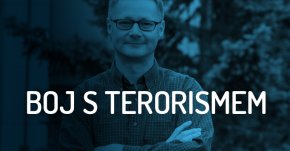
Prof. Oldřich Bureš z Katedry mezinárodních vztahů a evropských studií se zúčastnil zajímavé diskuze, respektive natáčení dílu podcastu 10:35 na téma Co odlišuje terorismus od jiných forem násilí. Společně s Vojtěchem Šimákem a Petrem Mlejnkem byly diskutovány soudobé i historické aspekty terorismu.
Co odlišuje terorismus od jiných forem násilí
16. 8. 2026 Autor: redakce
Prof. Oldřich Bureš z Katedry mezinárodních vztahů a evropských studií se zúčastnil zajímavé diskuze, respektive natáčení dílu podcastu 10:35 na téma Co odlišuje terorismus od jiných forem násilí. Společně s Vojtěchem Šimákem a Petrem Mlejnkem byly diskutovány soudobé i historické aspekty terorismu.
 Elektrizující atmosféra a plný klub: MUP Night zakončila školní rok ve velkém stylu
27. 6. 2026 Autoři: Dominik Borek, Sebastian Szaban
The end of the school year party se uskutečnila v klubu The Pitch a proběhla ve skvělé atmosféře plné hudby, zábavy a dobré nálady.
Elektrizující atmosféra a plný klub: MUP Night zakončila školní rok ve velkém stylu
27. 6. 2026 Autoři: Dominik Borek, Sebastian Szaban
The end of the school year party se uskutečnila v klubu The Pitch a proběhla ve skvělé atmosféře plné hudby, zábavy a dobré nálady.
 Profesní certifikáty GSA v oblasti marketingu leteckých společností a destinačního managementu
23. 6. 2026 Autor: Nora Dolanská
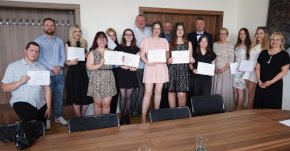
Slavnostním předáním certifikátů studentům, kteří absolvovali kurz pro General Sales Agenty v oblasti marketingu leteckých společností a destinačního managementu, letos poprvé vyvrcholila doplňková výuka bakalářského i magisterského studia na Katedře cestovního ruchu.
Profesní certifikáty GSA v oblasti marketingu leteckých společností a destinačního managementu
23. 6. 2026 Autor: Nora Dolanská
Slavnostním předáním certifikátů studentům, kteří absolvovali kurz pro General Sales Agenty v oblasti marketingu leteckých společností a destinačního managementu, letos poprvé vyvrcholila doplňková výuka bakalářského i magisterského studia na Katedře cestovního ruchu.