

29/10/2013 - Conference - Global Chalenges and Local Reactions in Two Young Democracies: The Czech Republic and South Africa Revisited
Department of International Relations and European Studies cordially invite to the upcoming conference "Global Chalenges and Local Reactions in Two Young Democracies: The Czech Republic and South Africa Revisited".CONFERENCE DATE AND VENUE:
29 October 2013, 9 a.m.,
Metropolitan University Prague, Žižkov, Prokopova 16, Prague 3, Czech Republic
WORKING LANGUAGE: English
Aims of the conference:
“Global challenges and local reactions in two young democracies: the Czech Republic and South Africa revisited” aims to compare the socio-political, cultural and sociolinguistic developments of two “young” democratic societies, the South African post-apartheid state and the post-socialist Czech Republic. Although these two countries vary greatly, there are also some commonalities among Czech and South African society. In both countries, the year 1989 marks the termination of oppressive systems that were characterized by the lack of freedom and democracy, and atrocious crimes against humanity. The conference shall examine contemporary developments against the background of globalization. Diverse and complex challenges such as the upsurge of ethnicity, discourses of nationalism, linguistic hegemony, social stratification, political culture, power dynamics, and integration into bigger entities such as the European or African Union, etc. rank among them.
Conference programme:
The conference will offer reflections on South African IR and the challenges of decolonial thinking, as well as papers examining post-transition experience of both the Czech Republic and South Africa. Anthropological perspectives on the creation of new national identities: the South African and Czech experience will be presented as well as contributions that focus on new political culture in both countries. Representation of women in contemporary postcolonial women’s writing from Czech Republic and South Africa will add another scholarly perspective, as well as papers looking at the position of English and other languages at Czech and South African universities from the perspective of language management theory. Renowned scholars from South Africa and the Czech Republic, as well as junior researchers from different fields of interest will participate.
Registration at http://registrace.mup.cz
Inquiries:
Inquiries regarding the conference shall be directed at: horakova@mup.cz
On behalf of the scientific committee,
doc. PaedDr. Hana Horáková, Ph.D.
Department of International Relations and European Studies
Metropolitan University Prague
Aktuálně
 Co odlišuje terorismus od jiných forem násilí
16. 8. 2026 Autor: redakce
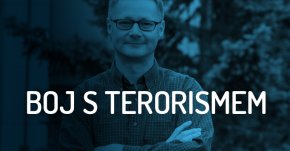
Prof. Oldřich Bureš z Katedry mezinárodních vztahů a evropských studií se zúčastnil zajímavé diskuze, respektive natáčení dílu podcastu 10:35 na téma Co odlišuje terorismus od jiných forem násilí. Společně s Vojtěchem Šimákem a Petrem Mlejnkem byly diskutovány soudobé i historické aspekty terorismu.
Co odlišuje terorismus od jiných forem násilí
16. 8. 2026 Autor: redakce
Prof. Oldřich Bureš z Katedry mezinárodních vztahů a evropských studií se zúčastnil zajímavé diskuze, respektive natáčení dílu podcastu 10:35 na téma Co odlišuje terorismus od jiných forem násilí. Společně s Vojtěchem Šimákem a Petrem Mlejnkem byly diskutovány soudobé i historické aspekty terorismu.
 Elektrizující atmosféra a plný klub: MUP Night zakončila školní rok ve velkém stylu
27. 6. 2026 Autoři: Dominik Borek, Sebastian Szaban
The end of the school year party se uskutečnila v klubu The Pitch a proběhla ve skvělé atmosféře plné hudby, zábavy a dobré nálady.
Elektrizující atmosféra a plný klub: MUP Night zakončila školní rok ve velkém stylu
27. 6. 2026 Autoři: Dominik Borek, Sebastian Szaban
The end of the school year party se uskutečnila v klubu The Pitch a proběhla ve skvělé atmosféře plné hudby, zábavy a dobré nálady.
 Profesní certifikáty GSA v oblasti marketingu leteckých společností a destinačního managementu
23. 6. 2026 Autor: Nora Dolanská
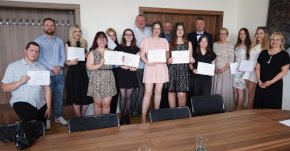
Slavnostním předáním certifikátů studentům, kteří absolvovali kurz pro General Sales Agenty v oblasti marketingu leteckých společností a destinačního managementu, letos poprvé vyvrcholila doplňková výuka bakalářského i magisterského studia na Katedře cestovního ruchu.
Profesní certifikáty GSA v oblasti marketingu leteckých společností a destinačního managementu
23. 6. 2026 Autor: Nora Dolanská
Slavnostním předáním certifikátů studentům, kteří absolvovali kurz pro General Sales Agenty v oblasti marketingu leteckých společností a destinačního managementu, letos poprvé vyvrcholila doplňková výuka bakalářského i magisterského studia na Katedře cestovního ruchu.